12 Jun 2021

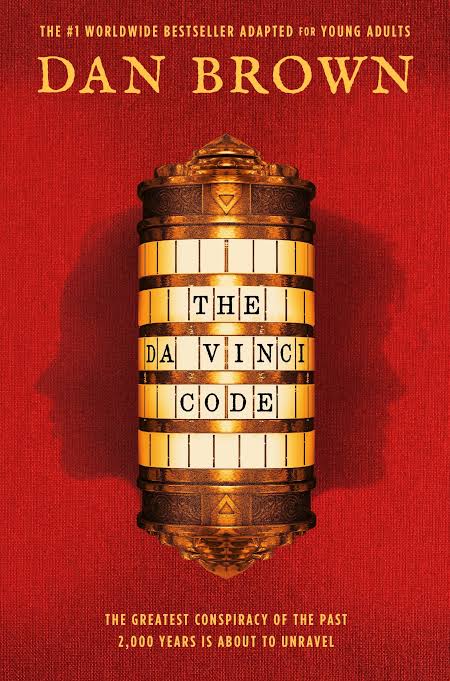
The Da Vinci Code2003-Robert Langdon : The Constitution of the title


Introduction

The novel, Da Vinci Code by Dan Brown, published in 2003. A number of his novels are considered to be a treasure hunt; Angels & Demons, Inferno, The Lost Symbol, Origin and the present novel itself. In 2005, the author was influenced by getting consideration of being one of the hundred world famous influencers, who was credited with keeping afloat the publication industry by producing such mysterious novels. His novels are translated into 56 languages and more than two million printed copies are sold. The novel Da Vinci Code is about a code, revolving around the entire novel and also giving push to such events and incidents to lead further the novel, revealing laterly, what is becoming of the puzzling fibonacci sequence.

Abstraction

The Novel Da Vinci Code - Dan Brown, itself speaks of its significance, that is based on decoding the code, and the truth is in front of you. While trying to decode the code, many mysteries; regarding Christianity, Paganism, sacred-feminism, through various symbols, artworks and motifs, which contain the main symbolism, came into being with its own proclaiming  truth, accepted somewhere, somewhere made faultery and somewhere known the essence tried to inscribe in a book. It is said: "The magnet only attracts the things, where the magnet belongs to. There are many elements otherwise, which may have attracted, but magnet, doesn't lend them that opportunity, as they don't have that tendency". So attracted the righteous one who had the true temperament to understand the whole behind curtain picture, if revealed it may have dire consequences.


Keywords: Dan Brown, the Da Vinci Code, symbols, motifs, art-works, Christianity, Paganism, Sacred-Feminism.


The background of the novel

The history of this novel is taken from the 'Holy blood & Holy grail books - Henry Lincoln, Michael Biagnet and Richard Leigh' and 'The book of John : The actual quest is for, "the Holy grail". The New Testament'(comprising entirely a bygone history, though traces have been vanished but it has been searched out about)Where Mary Magdalene is alleged, 'a faultery woman' until and unless her chastity isn't proved, she won't be considered as 'sacred' as she was used to. While on the other side, the statement says, Mary was present when Jesus was crucified, gathering the blood of Jesus in a container(that is the actual holy grail). On the contrary, the story is that Jesus and Mary had got married secretly and during the last supper, she was sitting beside Jesus, being one of the apostles. Thus they signified to be producing the generation of 'Holy blood' where Sophie Neveu and his brother, assumed to be two of the descendants, following this holy bloodline, of Merovingian kings of France. While it can't be as such as the historical character is mere representation of people, so how only two of the contestants can be of belonging, while who are others? It perhaps is possible that the entire abode of people belonging to merovingian kings of France but in attempt to survive on Earth, fractions are made, therefore conflict in beliefs.


The Significance of 'The Da Vinci Code'

The significance of 'the da vinci code's is when there is history involved or it is mere a shallow pan without material to proceed further. Thus the author has well-woven the history with present time. In attempt to do so it is retaining the significance of history as well as keeping intaction with the mysterious novel. Therefore construing an idea about christianity 'what was christianity? How its conceptualization was? How it has fractions, what sort of, some sacred some undeciphered yet denoting the special realm ?


The Da Vinci code itself is impregnated with all the mysteries, regarding the Holy grail. Jacques Sauneire is murdered in the Louvre museum along with three Senechaux, although isn't revealed by whom in the novel, but by Silas: a monk, hired by Leigh Teabing(later on revealed). The mystery revolves around the 'vitruvian man' being drawn by Jacques Sauniere himself, on his navel, when torched by Fache(DCPJ) getting back away, its beam illuminates some of the part. Sauniere was the worshipper of (paganism). The sketch in the novel signifies nothing, but half of a woman that is amalgamated with the pointed top head of a man. This is how harmony is established in society and if harmony isn't presumed in this way, there is mere anarchy surfaced. Subsequently the world was torn apart. Mary Magdalene is such a crucial figure, that signifies the very title of the novel and therefore sacred-feminism.


Thus this is the very figure that leads the progression of the novel further.


Symbols, Artworks and Motifs


These three elements in this novel are of much importance, the entire mystery is unraveled by these constituting parts. When Robert Langdon and Fache, approach near the body of Jaques Sauniere lying on the parquet floor, Langdon observed the body lying in the shape of pentacle(five pointed star) and it seems the curator himself has stripped off his clothes and drawn something upon. Which Langdon says belongs to the pagan religion. Later on some scrambling inscription in purple letters emerges beside his body, that reads..


O, Draconian Devil!

Oh, Lame Saint!

P. S. Find Robert Langdon

13-3-2-21-1-1-8-5


There are always two energies in the world good and bad, besides we humans are shadows of these two binaries. 'Draconian Devil' and 'Lame Saint' are two different personalities or something an indication of insufficiency without one another, therefore the two only are capable of making the whole part or it may be the point to Robert Langdon's journey in itself followed by these two powers. Which he gradually gets on with into the novel.

At first only three lines are fathomable, the last one is fathomed, when Sopie later on saves Robert Langdon from the clutches of Fache, who has kept Langdon under observation as the last line reads "Find Robert Langdon". When earlier having found the scrambling, Fache told that perhaps, Sauniere has written the name of the killer(La Vengeance), denied by Langdon, how it can be as the text as well as the symbol drawn on the curator's navel aren't coinciding with each other, by connecting with history. But by again giving a glimpse of history, in accordance with the curator, Langdon is able to get that the curator was actually belonging to Yin Yang like concept therefore Sacred-feminism, where a woman is revered.There is nothing as Leonardo Da Vinci was favoring paganism and loathing Catholic religion. How can it be? While Fache was trying to impose that this indictment is such and Leonardo Da Vinci was commercializing Christian religion, he was a homosexual, where a banker has spent his entire investment. In a way trying to portray Sauniere's character with derogation. With which he wasn't at all concerned. 


It is revealed as the novel progresses further that 'the code is combination of both; Leonardo Da Vinci & Monalisa' and the number isn't something ordinary but 'a fibonacci sequence' regarded with divine ratio. Where some of the two numbers are followed by the third number(summing up the prior two). Eventually it is disclosed as it is nothing P. S. means (Sophie Neveu), Sauniere was his grandfather and it is the account number, supposed to be opened by Sophie Nevue with the help of Religious symbologist(Robert Langdon). Having found a small chest box, they hear some gurgling sound coming from the box. The inside shape seems to be of the Holy Grail, but the thing wasn't put so. Proceeding further the secret is disclosed at last, when Langdon approaches the container, where Mary Magdalene is lying down. Somewhere beneath the Roseline, the pyramid of 'Chalice and Blade' is situated. The chalice is 6 feet long, while the blade, is in supporting position, is half of the size of the chalice and this is how two pyramids were created by Jacques Sauniere. It is observed in the novel, where there is the clue of the traces of holy grail, experienced in the chest, hangs an artwork, which fills anyone with wonder, as Langdon feels seeing at first sight.


Motifs till the end of this novel, keeps on recurring as a reminder, the thing is still unexposed, and you're supposed to remember until and unless it isn't disclosed.


This is how the main symbol resurfaces on and often, engulfing other miniature symbols, motifs and artworks, associated with the holy grail. All the associatives, conveys the traits of the holy grail. But one can see in Fache : a contrasting persona unfurling through orthodoxy towards faith, a particle of Opus Dei institution, where according to the Sardine sister, a woman is considered inferior to a man and treated as a trivial being, being observed by her. While in Saint Sulpice institution, the woman is free to live her own part, though with some reliable restrictions.


Conclusion

Deciphering the mystery, it seems Mary Magdalene, though the figure of history, requires her traces through her own descendants, put into the worldly matters. We found in the novel, the grandmother and grandfather of Sophie Noveu, along with her own blood mother, but in similar manner, Jesus's character isn't fictionalized. Is it because "Mary Magdalene" was outcasted, so she was given such prominence by her own people"? Are the people surrounding, actually favoring her? Just goodness in disguise? Was she more good and pious in her approach, the people confronted her with enviousness, melted into righteousness?..It remains to be seen.


Works Cited

Brown, Dan., "The Da Vinci Code." Published in 2003.


Lincoln, Henry., Biagnet, Michael & Leigh, Richard., "The Holy Blood & The Holy Grail." Published by Jonathan Camp, in 1982.


Phillips, Stone., "Secret Behind, the da vinci code.", nbcnews.com, 14th April, 2005. https://www.nbcnews.com/id/wbna7491383


The New Testament : The book of John


Winters, Dan & Devlin, Keith., "Cracking the Da Vinci Code.", Discovermagazine.com, 26th June, 2004. https://www.discovermagazine.com/the-sciences/cracking-the-da-vinci-code.


Assignment Submission : Waiting for the Barbarians - Allegorical Representation

 Introduction

The novel 'waiting for the barbarians' - J. M. Coetzee, published in 1980, whose title is taken from the same title poem, by C. P. Cavafy. The novel is influenced by Italian writer Dino Buzzati's ' the Tartar Steppe ', published in 1940. The novel revolves around two main characters, who're being allegorised in the novel, one is exercising power, another is resisting the power, respectively Colonel Joll and the magistrate are in conflict, due to the different temperament of minds and unidentical ideology.


Abstract

In 'Waiting for the Barbarians' novel, we're supposed to see how imperialism is allegorized here, through two different characters. How a person as unwanted and rebellious to the happenings, in and around, is thrown away unpitiely from the established society. The society now speaks only the empire's name, not of the oppressive forces, working against and so tries to banish them from the society, they can't be ever adjusted within the confined spaces of society. As they find unable to adjust, they're outcasted and found a new space from themselves. Confronting this new contraction of life, how many things seem to be emerging out, which until now were lying untouched. But now it is tangiblized, sensationalized, felt and given required response, though in some amount partially.


Keywords 

Waiting for the Barbarians, J. M. Coetzee, Allegorization, Imperialism.


Vivid definitions for literary allegorization


Brenda Machosky reminds us: "Allegory is to say one thing and mean another" and "It has always demanded that we think otherwise"(7). It is a way of writing and interpreting literature, highlighting contrast between an apparent meaning.


Keeping this literary quote in mind, on allegorization in 'waiting for the barbarians'. When Colonel Joll has just arrived, with two disc glasses, those are more opaque(as per the magistrate's observation) and which indirectly imply when he says, he can see only the opaque glasses, while Colonel can see anything from inside. Aptly, whatever is going in Colonel Joll's mind at that time, noone can see, even predict, but yes by his demeanor, one can suspect, there is something going on in his mind. Though is still not surfaced, but in sometime would get surfaced and this happens later on in the novel. When the Magistrate is helping that girl out of sympathy, which interprets otherwise later on, he is entrapped in the trap, of deceiving the authority by helping the girl, thus he must be imprisoned in Jail for a very long time.


The magistrate only knows what is told by Colonel Joll, about driving animals, how once on frontier, people used to eat snakes and he had captured an antelope, but don't know as he is belonging to third beauru, an important division of civil service, he won't spare him. What he actually is, not shown and what he isn't is acted upon repeatedly.


In one more incidence, when the Magistrate is around the hut, where prisoners are kept. Eyeing the old-man and a boy, he tries to negotiate what the matter is. Getting as nothing but as they were on road, in search of the doctor, as the boy has developed a sore, they were abducted and fetched here. They altogether don't know what is the matter and what is the crime that they have committed. While narrating the whole, experienced experience, the boy continuously looks at the Colonel, through Magistrate's shoulder. Trying to say whatsoever has happened to him, for everything this Colonel is responsible. The Magistrate as novice to this other face of Colonel, imbibe he must be looking staringly, because his spex that he had worn, is visually so weird.


This way, the Magistrate becomes victim, while the colonel becomes the imperialist. Through whom the power is operating, is still not mentioned in the novel. When the winter arrives Colonel with all his associatives left the place, planning to go somewhere. Where isn't mentioned in the novel.


Thus here as Walter Benjamin says: "Allegories are, in the realm of thoughts, what ruins are in the realm of things". Subsequently the quote is logically inscribed as if allegories ruined in the realm of things, and if it is found in thoughts, "Allegory then, is the doubling indeed, the multiplication of texts, within and around the work of literature or art - David Joselit.


Seems to be a suitable quote. From one text only, many consequent concepts and methods are coming into being, getting marked through various writers, presented through other facilitative artistic works.


The allegorized characters in the novel


I have already discussed the matter in detail, in previous point. I would like to elaborate now my point in succinct manner.


The Magistrate by giving in detail description of tribal people and their surroundings, trying to convey that they can't indulge themselves more in committing crimes, and if committed incase, they pay penalty in form of paying fine or doing some labour work. One can literally visualize, what would be the proportion of committing crime left for the tribes. It rightly signifies, that noone can get anything easily but by pain as the Magistrate says..


"Pain is truth, all else is subject to doubt, that is what I bear  away from my conversation with Colonel Joll."


Tribal people's pain, can be literally seen as they don't have any good position in their lives, they simply steal or cut a pack of animals from the train, though in return raided, endeavors to survive. That is why he wants to convey that they don't cost much, so how they would committ any crime? They themselves don't have enough food to make them thrive..They would try to get the food or involve themselves, committing crimes. In return not getting anything but mere punishment..How it is possible. Actually wants to show him the structure of barbarian society. While he isn't able to see the pain, perhaps understanding it as mere pretension and utilizing his fake and unuseful  power, which is full of bragging nothing else, and violence, to get the truth. Who are not at all hiding any truth, in concern they don't have anything to speak, as more immersed in making their lives at least ordinary to live.


Thus the Colonel seems to be representing 'imperialistic approach' while the Magistrate mere a 'victim' who doesn't understand what actually is lying behind the disc glasses and how he may know the actual truth. He only sees the life, as he is habituated to see, beyond this he us unable to see. This is where allegory thrives in thoughts and get ruined in things. As and when we see any made sculpture, we identify it, by the impression  the statue had left on us. For which we had to refer a historical documentary to get factually how the persona was.


Conclusion


Hence speech is expression and indeed just as writing is. Traditionally the literal meaning in allegory is overshadowed by the figurative one. Because this surface meaning is doubled by the figurative one, external to the text and because allegory refers us to distant origins of meaning suggested by Benjamin's metaphor of "ruins"(178), a good deal of allegorical interpretation becomes abstractly intellectual trying to establish link between what is stated and what is implied.


Similarly happening in this novel, though the time and place are unspecified.


Works Cited

Buzzati, Dino., "The Tartar Steppe." Published in 1940.


P. C., Cavafy, "Poem: Waiting for the Barbarians." Written in 1898, Published in 1904.


M., J., Coetzee, "Waiting for the Barbarians." Published in 1980.


Neimneh, Shadi. "The Visceral Allegory of Waiting for 'the Barbarians' : A post-modern rereading of J. M. Coetzee's apartheid novels." Callaloo, vol. 37, No. 3, 2014, pp. 694-709. JSTOR. www.jstor.org/stable/24265165. Accessed 7 June 2021.

Assignment Submission : Cinema - Reading Movie Documentary of The Da Vinci Code

 Reading the Da Vinci Code movie, through Lacanian and Freudian theories on cinema by combining with Scopophilia and Voyeurism


Introduction

The Da Vinci Code novel published in 2003 and the novel adapted into film, released in 2006. All characters; Robert Langdon(Tom Hanks), Sophie Neveu(Audrey Tautou), Leigh Teabing(Ian Mckellen), Silas(Paul Bettany), Beautiful Fache(Jean Reno). These all characters, read in the novel, are  portrayed in the film. The film is said to have themes, based on religionism, institutionalized belief system, and a specific culture, followed by the descendants of Mary Magdalene(Who believed to be belonging to the royal  bloodline of Merovingian king).


Abstract

Here we concern to read the Da Vinci Code movie, where all the characters seems to be immersed into the only matter, that is called the code, 'Da Vinci'. Let's see how the film is operating, applying various theories.

Reading any movie, requires many theories and methods to be kept in mind. It won't only suffice by keeping those theories in mind, but how you can apply those theories, while reading any of the movies. Those theories would lent you an insight towards experiencing the movie. Through which you would be able to penetrate yourself in deep, visualizing the matter distantly and coming close to, reflecting to yourself and accordingly serving the space of filtering in and filtering out.


This paper aims to see how by reading through all the applicable theories, it lent out a further point to ponder upon, only in minute form.


Keywords

The Da Vinci Code, Movie Reading, Lacan, Freud, Scopophilia, Voyeurism.


MOVIE READING


The movie starts from the murder of Jacques Sauniere in museum Louvre. Where as in suspicion area, Religious symbologist is about to go to bed, taken accommodation in Ritz Hotel. The scene seems to be more gloomy, gradually transforming into sombreness, from there into light of the revealing scene, when it is conveyed: Jacques Sauniere is died, one of the members of Priory Sion, with his three Senechuax. As seen Robert Langdon's name in calendar, he is approached by DCPJ Fache. To the same organization, Sophie belongs, by being a cryptographer. 


Gradually the entire story opens up as being blindfolded to audience, which serves the reason, to arouse curiosity in audience, sitting in their comfort zone and impels them to think, 'what happens next'. And what is this figure, named "Mary Magdelene" who keeps history for herself. The novel as well as the film adapted upon on the same novel are claimed to have fictionalized the story by fusing into.


By unraveling one after another symbols, the entire movie is getting opened infront of the audience, and eventually ending by finding the main character, on whom the entire movie is based upon.


Movie : Social Context

Socially the movie is very high in retaining its texture. All are normal in the movie, until and unless, the villain playing behind isn't revealed. As happening in one of the scenes, where "Leigh Teabing" is only known by his good behavior, maintains with both; Sophie and Robert Langdon, but noone knows the actual murderer of the Priory Sion. Silas himself was hired by Leigh Teabing to kill Jacques Sauneire and three Senechaux, similarly Aringarosa is also connected, and these all are the persons, who somewhere are connected to the institution, Opus Dei. Where differences regarding sexuality, surfaces. Considering this, men considered to be superior, while women as insignificant being. Who don't have desires, emotions, feelings, inclinations, only mere a puppet of handheld men being, utilizing as they want. While Saint Sulpice promotes altogether a different institution, where women are adored and given deserved respect, and so in one of the scenes, when getting call from Opus Die as someone wants to come to Saint Sulpice, only to see Sandrine sister, the sister is disturbed but normalize herself, prepared to confront the person, going to pay visit. In contrast only one can decipher the actual frame of embodiment important for further uplifting of concerned society.


Movie : Political Context

In movie we see basing on various religions, policies are formulated and accordingly kept for functioning and regulation. The quality of religion voices the played policy by each religion. In one of the scenes, when Robert Langdon is enquiring about the code, scrambled beside Sauniere's body, with Fache. Fache speaks of Leonardo Da Vinci, as against catholic religion, while indeed, it wasn't so. He believed in paganism, approves when found some evidences based of aforementioned institution. On part of Fache, it wasn't the case but seemed as intentedly trying to inflict him with false abuses, and tainting him considering his religion to be superior.


Movie : Cultural Context

A Christian culture is seen, who has conflict with Paganism. If one is to see from the point of view of Mary Magdelene, who is absent in this novel. All characters in one or the other way trying to promote their own cultures. Mary wants to convey, I had a very rich bloodline, but I wasn't predicting the generation of this very ancestry would be as such, following their ways of believing. If following, but trying to impose on others the same, not happening so, there is rivalry among them or then at extreme level, the person is murdered/killed. While she herself wasn't wanting for her generation this, so a particle of Mary Magdalene is still there to run the show, but Sophie herself seems to be trapped in the same entrapping net and not able to realize, what she herself has played, actually is faux than nothing else. Ultimately it only seems as one has fulfilled some required companionship. What one was trying to found outside, actually had been lying inside, since times. But still she isn't able to recognize the inner call, and treading ahead unprecedented.


In last supper scene, Mary Magdelene is explicitly displayed sitting beside Jesus, representing as one of his thirteen apostles.


Left Impression on Spectator


The two kinds of Apparatus theories are connected by the idea that the cinema stimulates or causes archaic regression, but while the first emphasizes the 'inner' aspect of this process, the retreat of the subject into a boundary undifferentiates state.


The latter emphasizes the impact of archaic desire on how and what we see.  Since archaic desire characteristically manifests itself in adult life through perversions, psychoanalytic film theorists proposed that the cinema is distinctive in mobilizing a whole range of perverse pleasures.


Concerning these two apparatus theories. When anyone watches, what does the cinema do; if it stimulates or causes archaic regression.


When one is watching this film, there may be some feeling like, how it would have been good, if I were Audrey Tautou! How smartly she is working as a cryptographer, how a handsome here, she has! As everything is in her lap and the spectator is abandoned of(A kind of craving with which not you, but someone is blessed). And when it is more liked by anyone, the character is worn out by the concerned person, where Lacanian theory comes into being: 'Looking that informed by desire, is defined by gaze'. Which isn't giving you self-assurance but making you paranoid, which is away from what you have perceived. Here is where your unconscious come into being. You only know how good looking someone is, and how gifted she/he is but you won't have the same experience they had gone through. You would only see, how you used to see your own life. This is how the utilization and usefulness differs from one another. They have utilized you must only have imitated and subsequently stimulated the world of appearances.


Due to the theory of mirror-misrecognition by Lacan himself, you can watch the movie and imaginatively see yourself functioning, but you can't see yourself in the movie, as mirror shows you your real picture. It is only the product of your representation system. It is also happening sometimes, when you watch any movie, you don't have any way than seeing yourself in this way. This is how you're stimulating yourself, this is how you feel yourself to be resisting. At such times such approaches seem to be reliable. In a way each and every approaches, one or another way, reflecting the lives people lived.

Likewise theory of Voyeurism and Scopophelia came into being. One makes you aware of the presence of stimulus, another won't make you realize as sexual pleasure has found its way in your own self. You see yourself under someone, whom the unconscious being is desiring, ready to abandon owned self, denoting your own personality.


Thus the impression that is left on spectators, varied in many ways, and it is through the representation system, the spectator reflects upon and accordingly watches the movie, if found appropriate but not so worthy to reflect upon, is hurled by retreating the subject into boundary undifferentiates state and this is how filtering in filtering out processes are moderated.

If it is stimulating again by some incident/occurring situation and this is how one incident is postponed and later on resumed, remaining to be seen. If it is recurring in this way, does this suggest, that once the person was unable to but now have some ability to fight with the circumstances, confronted. Or is it something, that until and unless, not solved out, keeps on surfacing? Like revenging and avenging work.


Conclusion


Hence by reading the movie, one or the other way, one reflects oneself but not able to see oneself as mirror dares to show. She/he is only seen as a shadow in river, when glimpsed on and found weird, unwanted, not crucial in anyway, attempts to run away from the situation. With others, it happens otherwise.


Works Cited

Brown, Dan., "The Da Vinci Code." Published in 2003.


"FILM: The Da Vinci Code. Released in 2006.


Allen, Richard., "Psychoanalytic Film Theory." Published in 2004, Blackwell Publishing.


6 Jun 2021

Assignment Submission - ELT - 2 : Digital Portfolio

Digital Portfolio Submission


Concerning the ELT-2 paper, we the students of Department of English, M., K., Bhavnagar, University, were suppose to exhibit our  skills of language learning through Digital Portfolio, made by us. The e-portfolio shows, how we had worked through the entire academic journey; comprising academic blogs(Thinking activities, sunday reading blogs, Movie screening blogs, Flip learning blogs, the blogs assigned for taking challenges(in form of generating a few seconds clip, conveying an idea of breath). Moreover many subsequent activities, regarded with this paper. Utilization of CALL aspect in learning by fusing 2.0 tools, appropriately generating a blog that says the story of used web tools. Was it successfully integrated, or had some gaps in doing so? If so, how the gap can be filled..


Learning experience(Creating Digital Portfolio)

 All was already ready, we had to gather the scattered material, displayed or saved on various digital platforms and by studying other options in the Google sites, for generating digital portfolio, had to insert our respective works. At first anything can puzzle you or as it is said, "the thing you didn't understand, fear you the most". When understood you can have a free play as Jaques Derrida instructs in 'Structure, Sign and Play' work, how to free play with words. While playing you just have to postpone the meaning of the word and again you have to resume. You have to play recurrently, without exhausting, feeling bored and getting tired. This is where your opportunity lies, just you have to attempt courageously. In a similar manner, I tried to create my digital portfolio. And to describe each and everything feasibly well, I elaborated on each point so the audience, whenever happened to have a look at my digital portfolio, may come to know how it was for me.


I'm placing my digital portfolio link here


If explicitly elaborating on this, I created a main page of any of the main topic. To create sub topic, I needed a subpage. Under create page only, an option of create subpage is appearing, tapping on, you can give respective title to the subpage also(This was all done through mobile cum tablet) and it was a nice experience to get through. You have to insert many things all along, then you have to check, after checking you have to see, is it something, which people can see hassle free..Keeping each and every aspects in mind you have to create one digital project. Which would speak of your academic achievements, your progression in the present field as well as the difficulties, you faced through the entire academic journey.


All things aren't put in digital portfolio rightnow, when putting, would be updating on this very page, so you can see on your own.


Thank you
S. Y. Kagdi,
A student at Department of English,
MKBU.

10 May 2021

Thinking Activity: Things fall apart-Chinua Achebe

 The Second Coming 

Turning and turning in the widening gyre   
The falcon cannot hear the falconer;
Things fall apart; the centre cannot hold;
Mere anarchy is loosed upon the world,
The blood-dimmed tide is loosed, and everywhere   
The ceremony of innocence is drowned;
The best lack all conviction, while the worst   
Are full of passionate intensity.

Surely some revelation is at hand;
Surely the Second Coming is at hand.   
The Second Coming! Hardly are those words out   
When a vast image out of Spiritus Mundi
Troubles my sight: somewhere in sands of the desert   
A shape with lion body and the head of a man,   
A gaze blank and pitiless as the sun,   
Is moving its slow thighs, while all about it   
Reel shadows of the indignant desert birds.   
The darkness drops again; but now I know   
That twenty centuries of stony sleep
Were vexed to nightmare by a rocking cradle,   
And what rough beast, its hour come round at last,   
Slouches towards Bethlehem to be born?


1. What is historical context of Things Fall Apart?

Ans: The novel is depicting the pre-colonial life of Africa(South-eastern part of Nigeria) and the latter part of the Nineteenth century. Which can be mostly experienced in second part of the novel by observing the intrusion of Europeans and the missionaries. The customs that are highlighted in the novel, is similarly actualized in real life, in Onishtha city.

2. What is significance of the title?

Ans: The title is borrowed from W. B. Yeats's poem, "the second coming." 

"Things fall apart; the center can't hold; Mere anarchy is loosed upon the world,

The blood dimmed tide is loosed, and everywhere the ceremony of innocence is drowned; The best lack all conviction, while the worst are full of passionate intensity".

3. Write a brief note on the concept of 'Chi' in Things Fall Apart?

The Chi concept is about the personal God. That would be interpreted as good or evil as per the person's deeds. For example: Unoka, the father of Okonkwo, who is failure as considered by his son, since he was so lazy, builded interest in music only and didn't bent to do some work, so his children may have good fortune as Nwabikie's children had. Three huge Barnes, nine wives, thirty children and only a highest title. But this was more than enough. While Okonkwo had to work hard to overcome poverty and misfortune, as it was considered, the gift given by his father. 

There is a stranger's story behind this. A person who didn't work, won't get occasion to be buried as normally the people who have contributed well in the village do. He would be left alone in the forest with swallowing stomach and limbs(as was the condition of Unoka). It wasn't only Okonkwo who was pitying this condition of his father, but the whole village was against this attitude. Thus it was considered his 'Chi' was faultery. Which wasn't making him realize, what he was doing is wrong. He must change his attitude towards the life. But getting involved more in the same process day by day. Perhaps getting used to the usual activity unable to come out of comfort zone but found contention in the providence on daily basis, condesing with the belief as if God sprinkling the graces upon.

 When he died, he was with the sickness of swelling, thus he can't be kept at home but in the evil forest to take his last breath on the above of the Earth. It is said: 'When he died he went with flute in his hand', nothing else. 

Lastly he had left the world, leaving his family behind(the mother and sister). Though not taken care by his father and didn't get anything in inheritancy, Okonkwo had to look after his mother and sister, from his meager income.

In contrast when Chielo a widow woman asked 'Ikwefe', as your husband had tried to threaten you with his heavy voice, carrying gun in his hand and how brutal it is! Then appreciated her by 'praising her Chi' as it is good. Otherwise noone could be so normal as she seems to be.

Conclusively it can be said, "Chi" is associated with conscience/awareness. Consceince can be good as well as bad, reflecting on the concerned personality. Accordingly he/she is ultimately rewarded by the Earth/God.

4. What do you think about the incident of Ikemefuna? How does it help to understand the Ibo culture in more specific ways?

Ans: It is aptly the difference between 'Nativism' and 'native identity'. The ibo culture represents the first notion, Ikmefuna endorsed with the latter. 'Everything that is borrowed, is to be given back'. The responsibility to look after Ikernefuna was given to Okonkwo for some days, while he wasn't knowing it will take all the three years. Alongside many conflicts were going on, personally and outside but he ignored because somewhere he had become fond of Ikemefune. Unaware of one day he would be given order to slain down Ikmefuna with his own hands.

Hence it seems that it is the time, which will indicate how you have to react, if in favour or disfavouring. Considering the latter you would become victim of someone else's hands, and the innocent, who is given an identity of nativism, without uttering word/asking his wish, he would be eliminated from the Earth forever.

This is how Igbo culture functions, where there is always revelry, revelry is followed by something ominous, the manliness showcased by having more wives, more children, many barns and a number of titles. In absence of these, a man is considered nothing, but a victim of society and therefore left to struggle through his own "Chi". It is also shown paralelly, even though having a number of wives, but they are treated equally, concerning their rights as well as husband's shared love, but actual honor is given to the first wife. Since it seems she is well aware of the customs taking place in Umofia village(Can be experience through one of the scenes, where palm-wine is distributed among the neighbours, others surrounding there and then the wives called at last, to have a drink of the same, but with decorum and with calculated measure).

Comprising all these elements we see how a culture is constituted.

5. Write a brief note on Ibo people's belief in the world of spirits.

Ans: It is mainly regarded with the growth of crops. When a person shows inability to work for his own livelihood, he seeks help from God, Oracle/priestess, who is any persona. That will suggest the person to slain a hen/goat so he may have better season of crops. 

As seen in one of the scenes, Unoka is reprimanded by making him realize, what he is doing is wrong: simply asking to kill a hen, so he may have better season of crops, where actually the soil is already exhausted and an exhausted land would be able to reward back the labour, that is contributed for your own living. Many had to cross seven rivers, to get them food. How you would be able to get the same, by only sitting at home? It isn't at all possible, moreover against the very nature. If anything goes against nature, it would become a hasty progression, therefore a resulted destruction. That will lead you nowhere but to your own downfall.

Likewise the Ibo people's beliefs are connected with the spirits. But it seems illusive that spirits are able to answer rightly.

6. How is the difference between the father land and the mother land is described in Things Fall Apart?

7. Write a brief note on the concept of Nativism and Native identity in Things Fall Apart.

8. Point out the important points of Things Fall Apart which can be compared with Kanthapura by Raja Rao.

21 Apr 2021

Thinking Activity: The Sense of an Ending-Julian Barnes(2011)


THE SENSE OF AN ENDING

                    ----JULIAN BARNES

The literal meaning disclosing is what is unwanted, unaccepted, a reason for exploitation is needed to be end. Similarly if seeing psychologically when embarkment is strated from such era, it is covering everything that entailed propagation, in subsequency everything is a result of, with modified intensity. Ultimately the psyche decides what actually the trauma is.

In this novel the atmosphere is dormant and dark, influenced by the nature of the characters, in a way it can be said a pinch of superstitious aura, revealing through dark psyche. Though everyone is unfurling with acuteness at surface but in deep everyone is struggling with shallowness, undeniable, inignorable but tend to succumbtion.

A critique on the novel

The sense of an ending, a 2011 novel, written by a British writer, "Julian Barnes". The entire story of the novel is narrated from the point of view of the protagonist named, "Tony Webster". Who is a retired man of 'sixty' recall ing the school days of three friends along with him, with the arrival of a new and cleverer friend than them, named "Adrian Finn".

The novel as based on psychological thriller, class conflicts, relationship problems, meditation on ageing and inconsistency towards memory. It reflects accordingly onto the entire novel. Taking position of himself as a man of sixty, Tony Webster narrates the entire story through his point of view, which begins with fragmentation of memory(where one sees inconsistency in recalling as it is recollected through pieces of incomplete sentences). He begins firstly by introducing his school days; where Alex, Colin, he(himself) and Adrian are put in Frontline. The three are all alike, regarding towards the approach of life as they think being in school and learning sincerely  in a way is like, their freedom of living free is snatched away, and there they have to moderate their desires, while youth is susceptible to fulfillment of desires. On the contrary Adrian is so different(he keeps his mind to himself and eyes down). They address him as a "scholar material" for the professors, who build interest in him as craving to know more about him and his experiences. Likewise is reflected on and often, whenever any professors, whether of History or English ask questions, to which he always replied distinctly that made them appal and wonder for a moment as if he isn't bewitched by witches/has grace of some miraculous things. When one is away from such extra-ordinary gifts, though gained by tremendous hard-work, the person who is experiencing for him/her this experience is something strange/unique which will place that personality on a higher level, while he himself doesn't consider himself as privileged to be.

E.G.: When Old Joe Hunt asks everyone about: 'what according to you is History'. Tony Webster answers as 'the history is lies of the Victors'. Colin feels it as it is 'a raw onion sandwich' while Adrian replied differently: "The history is that certainty produced at the point where the imperfections of memory meet the inadequacies of documentation". The latter made explanatory with Robson's suicide that how his mother is now no more, and his girlfriend has disappeared. It was said: "While Robson died, his girlfriend was pregnant" so she should be perceived as pregnant at present but is this the literal truth? Perhaps the baby has been aborted by the girl since noone in this world can set free someone by being only a parent of the child, still remaining only as a female parent. If suppose accepted then she has to go through many unexpected struggles. People won't let her live, as she wants to or may be by keeping a suspicious eyes, inflicting her with more pain and penance. Therefore who would choose such kind of life? Musingly, noone. If chosen to it is as 'knowingly pushing oneself into hell' and if wanted to choose, we already have an example from 'The Scarlett Letter' where Hester Prynne is already playing this role.

Thus what is existing today, can't relate with the past as noone knows considering all encircling aspects of society.

(How an only female has to made his way alone, as the crime as perceived by the society is something that is sinful and for that society one has to pay to this much extremity, and if not paid, none knows how she would be treated{it is as if one wants to inflict pain on others, doesn't literally throw stones, but do something that make them uncomfortable and unwanted, this in itself a painful infliction on them).

It appears from their demeanor towards living life that they want to lead carefree life, don't want to abide with the rules, the life is trying to imposing upon, wants to befriend with the professors and so when professor Dixon addresses them as "gentlemen" they pleased in, though they don't deserve such honorary title(It is also said we only crave for, what we don't have, if suddenly encountered with, gives one unbounded pleasure). 

Later on in the novel, we come to know the novel had jumped into another phase, where there is the talk on relationships. Tony's relation with Veronica, Veronica's with Adrian, subsequently Adrian's with Sarah Ford(Veronica's mother) and Tony Webster's with Margarett. We will do only a  brief critical review on Tony and Veronica's relationship.

One is clearly able to notice, both is having different personality type. One believes in history and another in love with poetry along with acceptance that poetry is abundant in material therefore won't loose the content. They differ paralelly, regarding the preference of music. Thus at times it shows Tony rather than understanding these differences and giving it acceptance, surfaces on and often the thing going in his unconscious mind, that makes him socially awkward and at times uncomfortable, subsequently stimulants this feeling more that transforms into emotion and so is ingrained in mind, that can't be doused easily. If seeing this same thing on Veronica's side, she seems to be as though and if seeing as an observer it is adequate in approach as she belongs to such starta of society so there may be some ignorance and vanity, considering the other people, as she is since been living the life. That has made a lifestyle, thus habituated to such things, nothing else. If anything outside of this comes, it makes her uncomfortable or can be said, perhaps would take enough time, to get adjust into. While Tony is so hasty in his approach and therefore subjective, can't see anything in whole but by situating into cocoon only. I think therefore the problems regarding life, is surfacing and eventually aggravating. In a way he himself seems to be the only problem creator for himself and lacking understanding to understand others, as not able to be frank, creating his own stories/narrations for others, to which perhaps others are unaware.

If elaborating further on Veronica, she seems to be lacking in persuasive empathy, what seems to her a lifestyle, for Tony it becomes arrogance, what seems to her, her taste, for Tony it becomes showing off and as not believing in embracing, what seems to her, her frankness, seems to him as more carefree girl. Here Tony mental horizon appearing to be narrowing down, while Veronica, playing innocent, besides she isn't knowing even the things going in Tony's mind. If one knows one may have an appropriate and better solution but if one doesn't know anything, how one can negotiate in any way. Therefore Tony amuses by making his own stories for others; penetrates but sees what he only wants to see, and so unable to interpret the character adequately.


Thus we see here how the critique for the novel can be made, elaborated through the character of Robson, considering Adrian's theory on History and eventually by analyzing the both characters Tony and Veronica by giving the analyzation a touch of critique.


Works Cited

Barnes, Julian., "The sense of an ending." Published in 2011.


7 Apr 2021

Elt-1


Html Generated Using Html Generator

INTRODUCTION

Since ancient times, when there wasn't any concept of speech invented, where animals used to communicate through their innate gift, of different sounds and from this usual articulation other animals were able to understand the message transmitted by that animal. But in human respects, speech is the distinctive feature in him, which differentiates him from it as it was said that animal's this speech organ would have been developed but it somehow restricted and remained in underdeveloped state of embryo.

With humans also, as these are social animals, interactive part of life can't be set aside but must be taken into consideration as It is also connected with biological aspect. Where any physical damage in your brain as the speech organ is associated with hypothalamus area of brain, will lead to the errors in learning the second language. Some may found inability in understanding but capable of forming small sentences, while others may found ability in understanding, but unable to communicate. While at children stage, who have acquired language with errors, may found at later stage a new path for a new language but have lost the originality.

Hence in this way interaction is a most complicated communication pattern in comparison to other species.

Html Generated Using Html Generator
Works Cited

Cotterall, S., & Cohen, R. (2003). Scaffolding for second language writers: Producing an academic essay. ELT Journal, 57(2), 158-166. 

introduction volume 1 (pp. 230-257). London: Sage Publications.

Hyland, K. (2003a). Second language writing. UK: Cambridge University Press.

Hyland, K. (2003b). Genre-based pedagogies: A social response to process. Journal of  Second Language Writing 12, 17-29.

Hyland, K. (2007). Genre and second language writing. USA: The University of Michigan Press.

Krashen (1982) Principles and Practice in Second Language Acquisition.

Kapoor, Kapil. "ELT: The role of English in India."

Martin, J.R. (1989). Factual writing: Exploring and challenging social reality. Oxford:  Oxford University Press.

Martin, J.R., & Rose, D. (2007). Working with discourse. Meaning beyond the clause. London: Continuum.

Martin, J.R., & Rose, D. (2008). Genre relations: Mapping culture. London: Equinox Publishing Ltd.

Prabhu, N. 1983. Procedural syllabuses. Paper presented at the RELC Seminar, Singapore.

I)rabhu, N. 1983. Procedural syllabuses. Paper presented at the RELC Seminar,


Singapore.

I)rabhu, N. 1983. Procedural syllabuses. Paper presented at the RELC Seminar,


Singapore.

I)rabhu, N. 1983. Procedural syllabuses. Paper presented at the RELC Seminar,


Sing

Parra, M. (1991). La lingüística textual y su aplicación a la enseñanza del español en el nivel universitario. Planteamientos teóricos. Forma y Función 5 (pp. 47-64). Universidad Nacional de Colombia, Facultad de Ciencias Humanas, Departamento de Lingüística.

Pinter, Harold. "The Absurdist play: The Birthday Party."

L2 written production. Unpublished Masters Thesis. Orientación Lingüística Aplicada. Facultad de Lenguas, Universidad Nacional de Córdoba, Córdoba, Aplicada. Facultad de Lenguas, Universidad Nacional de Córdoba, Córdoba, Argentina.


FEATURED POST

Journalism: #Lead-Writing #Feature-Writing

With the advent of information, journalism like concept came into being as a means to disseminate information; through newspapers , TV chann...